Property owners requiring pest control services in Roseville encounter intensive biological pressure from subterranean pests, wood-destroying insects, and seasonal rodent migrations across dry creek corridors. Precision Pest Care deploys systematic barrier treatments, interior harborage neutralization, and physical exclusion barriers to establish structural integrity across Placer County.
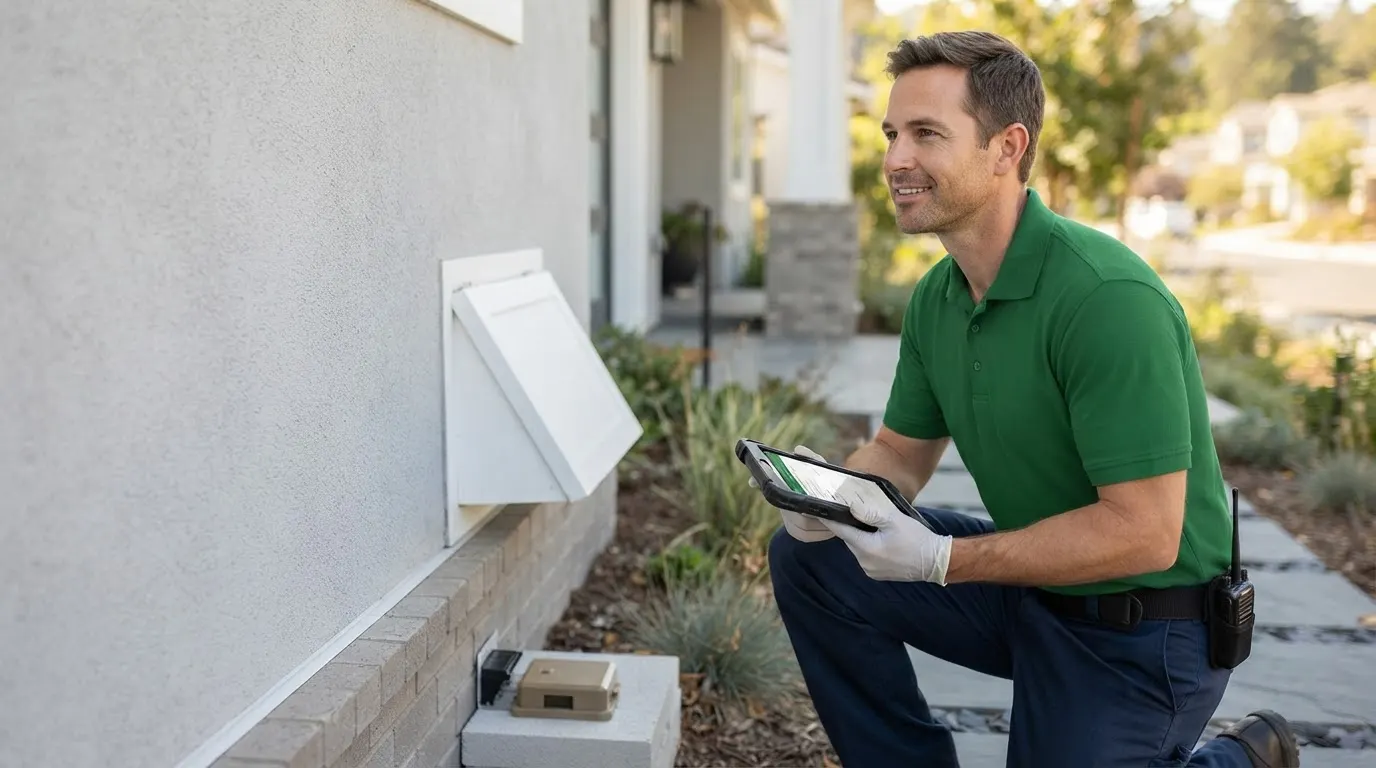
Pest control services in Roseville is an applied structural defense and biological eradication service that eliminates active insect and rodent colonies while securing exterior building envelopes against re-entry.
Every service reflects the same meticulous attention to detail, whether it's a single job or a larger pest control services project across Roseville.
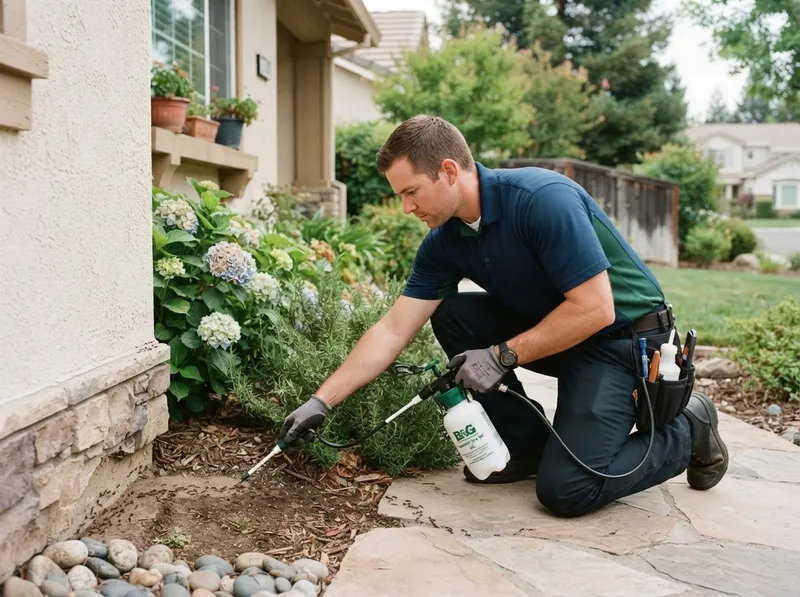
Argentine ants (Linepithema humile) construct dense, polygyne supercolonies throughout residential developments in Westpark, Highland Reserve, and Blue Oaks, nesting within over-irrigated landscaping, expansion joints, and hollow foundation masonry. Suppression procedures deploy non-repellent liquid transfers and target-specific biological slow-acting baits that worker ants systematically transport back to subterranean queens and larvae. This physiological transfer approach eliminates the risk of colony budding, a defensive fragmentation process that regularly occurs when standard store-bought pyrethroid sprays repel foraging trails directly into interior wall cavities and behind baseboards. Foundation perimeters receive low-toxicity non-repellent barriers calibrated strictly under statutory application guidelines established by the California Department of Pesticide Regulation . Field technicians inspect exterior moisture collection points, clearing clogged drainage lines, adjusting perimeter drip irrigation emitters, and removing decorative bark mulch that rests directly against stucco weep screeds to neutralize primary environmental attractants.
Get a quote →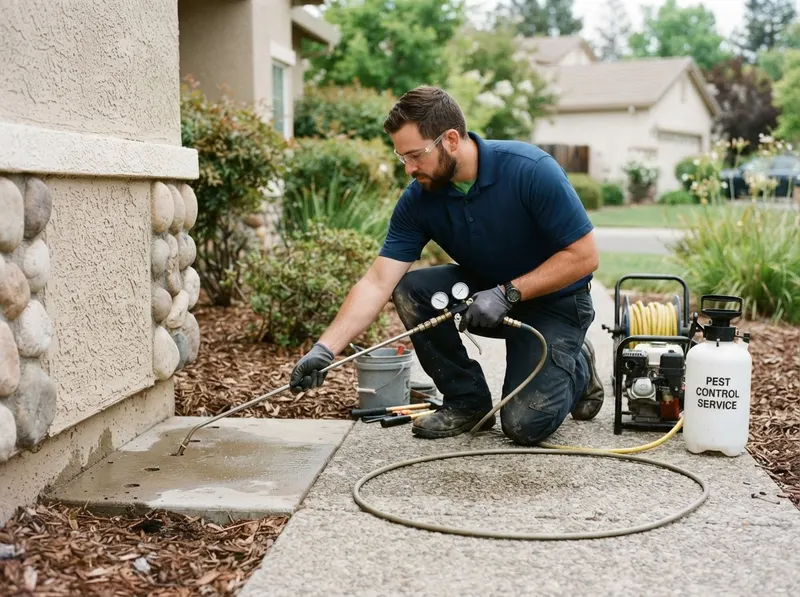
Reticulitermes hesperus, the western subterranean termite, presents an unrelenting structural risk to slab-on-grade foundations and raised floor crawlspaces throughout central Placer County. Field technicians drill precise, diamond-tipped injection access ports through concrete flatwork, patios, and garage aprons, while excavating continuous narrow foundation trenches through adjacent soil to apply liquid termiticide barriers. These specialized non-repellent compounds chemically bind directly to subsurface clay particles, intercepting subterranean worker termites as they navigate underground toward untreated wood framing, mudsills, and subfloor assemblies. Comprehensive diagnostic inspections catalog structural moisture pockets, vertical shelter mud tubes, and compromised structural timbers under rigorous technical standards set by the California Structural Pest Control Board . Follow-up monitoring protocols track soil chemical stability, ensuring long-term defensive integrity without off-target leaching into regional aquifers.
Get a quote →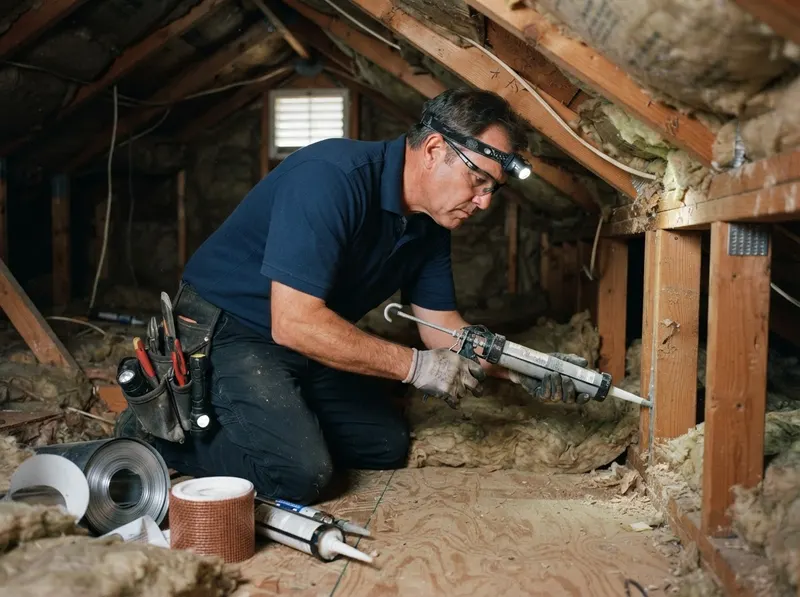
Roof rats (Rattus rattus) exploit elevated rooflines, barrel tile eaves, decorative trellises, and overhanging ornamental branches to breach attic insulation spaces across established communities like Crestmont, Maidu, and Cirby Ranch. Structural rodent exclusion protocols map every exterior structural aperture down to a quarter-inch diameter along roof junctions, chimney flashing, dormer returns, crawlspace vents, and plumbing penetrations. Technicians mechanically fasten rigid 23-gauge galvanized wire hardware cloth over attic ventilation ports and seal architectural gaps using commercial polyurethanes embedded with chew-resistant copper mesh. Internal snap-trap containment protocols clear active populations within crawlspaces and ceiling voids without utilizing interior anticoagulant poisons, strictly adhering to wildlife safety and exclusion directives maintained by the Centers for Disease Control and Prevention .
Get a quote →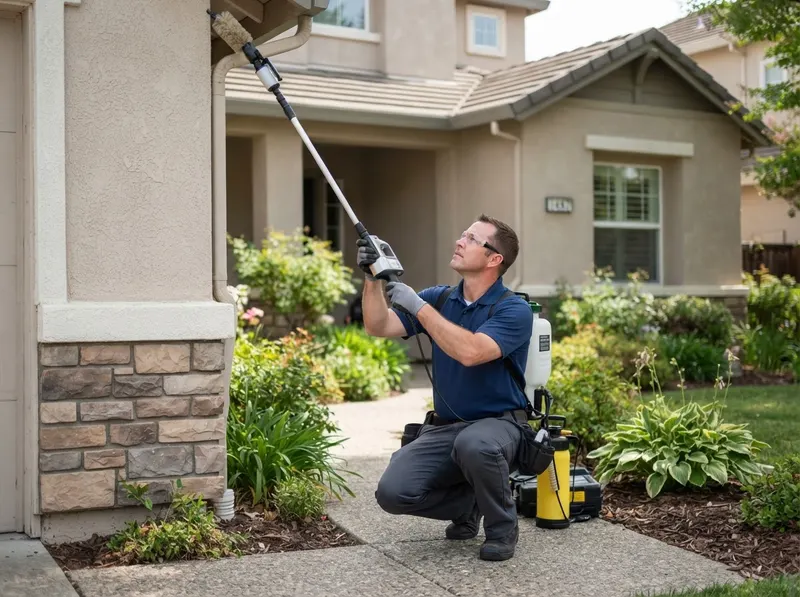
High summer temperatures throughout the Sacramento Valley drive black widow spiders (Latrodectus hesperus) and paper wasps (Polistes dominula) to build webs, egg cases, and aerial carton nests along roof eaves, irrigation boxes, stucco recesses, and covered patios. Technicians deploy high-reach mechanical sweeps to physically clear active webbing, structural nests, and subterranean burrow entries from foundation levels up to 25-foot rooflines. Microencapsulated synthetic pyrethroid treatments are applied precisely into low-disturbance harborage zones, expansion gaps, weep holes, and exterior utility penetrations. These micro-bead formulations withstand prolonged exposure to triple-digit summer heat waves, maintaining persistent crystalline residual protection while protecting beneficial non-target pollinators, meeting standards established by the United States Environmental Protection Agency .
Get a quote →
Oriental cockroaches (Blatta orientalis) emerge continuously from municipal sewer infrastructure, storm drains, and moist subterranean soil beds, entering residential properties through foundation weep screeds and exterior doorways. In contrast, commercial kitchens and multi-family structures frequently battle German cockroaches (Blattella germanica), which nest directly within the warm electrical components of refrigeration compressors, dishwashers, and food preparation cabinetry. Control programs incorporate high-potency insect growth regulators (IGRs) combined with low-risk gel baits placed in precise voids, motor housings, and utility runs away from food-contact surfaces. Targeted plumbing line remediation, p-trap biological flushes, and crawlspace moisture sealing remove environmental hydration, restoring sanitary indoor conditions aligned with protocols provided by the Placer County Vector Control District .
Get a quote →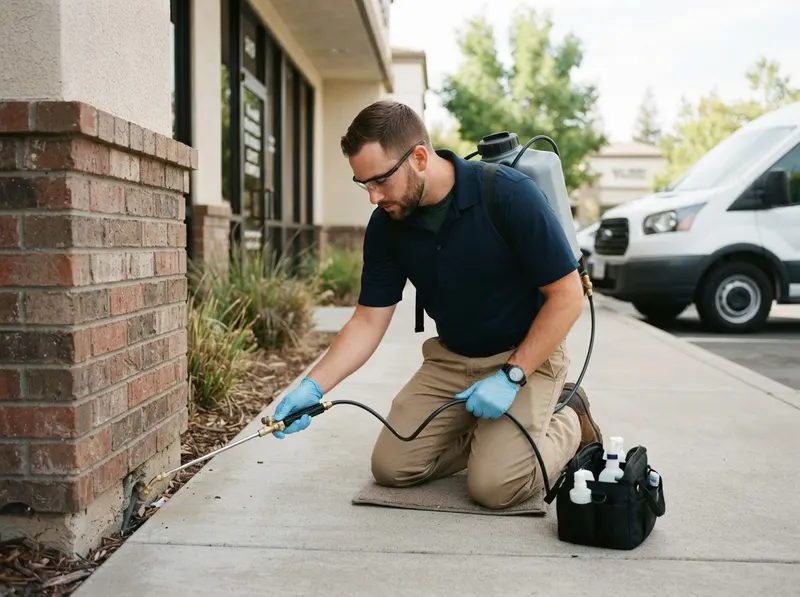
Commercial facilities, medical centers near Sutter Roseville Medical Center, and high-foot-traffic retail properties surrounding Westfield Galleria at Roseville require rigorous, fully documentable pest management programs. Technicians install tamper-resistant exterior rodent monitoring stations anchored along concrete structural perimeters, tracking consumption metrics through barcode scanning at scheduled intervals. Comprehensive digital logbooks record insect interception counts, pest sighting trends, and structural sanitation deficiency reports to satisfy municipal environmental health codes and safety audits. Facility supervisors receive continuous compliance data aligned with workplace hygiene guidelines supervised by Occupational Safety and Health Administration frameworks.
Get a quote →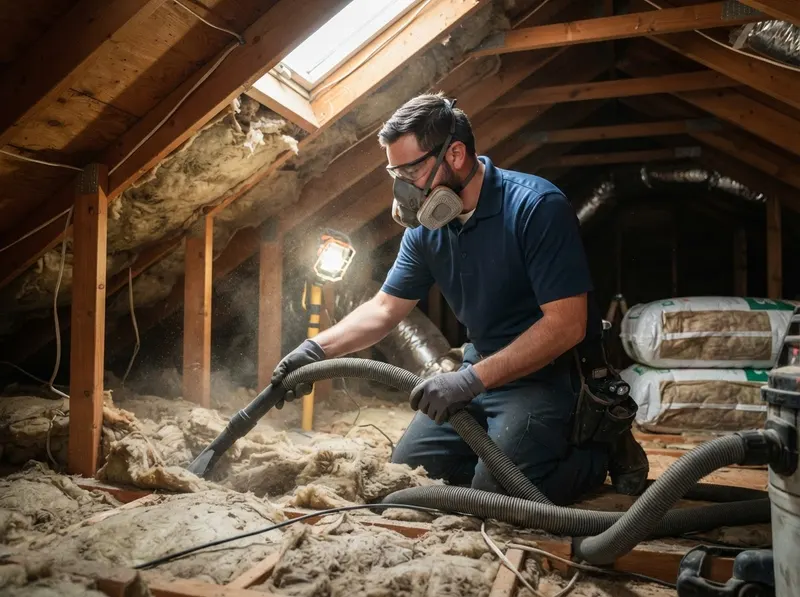
Rodent nesting activity damages attic thermal barriers, compressing blow-in cellulose and fiberglass batting while leaving disease-carrying droppings, urine trails, and pheromone pathways. Technicians deploy industrial HEPA-filtered vacuum extraction units staged outside the building envelope, withdrawing degraded, bio-contaminated insulation without releasing hazardous airborne particulates into living quarters. The entire attic footprint is treated using broad-spectrum botanical disinfectant fogs to neutralize bacterial pathogens and odor compounds that attract future pest intrusions. Technicians re-insulate attic spaces to state efficiency standards using thermally rated, pest-inhibiting insulation, operating under environmental air filtration criteria established by the California Energy Commission .
Get a quote →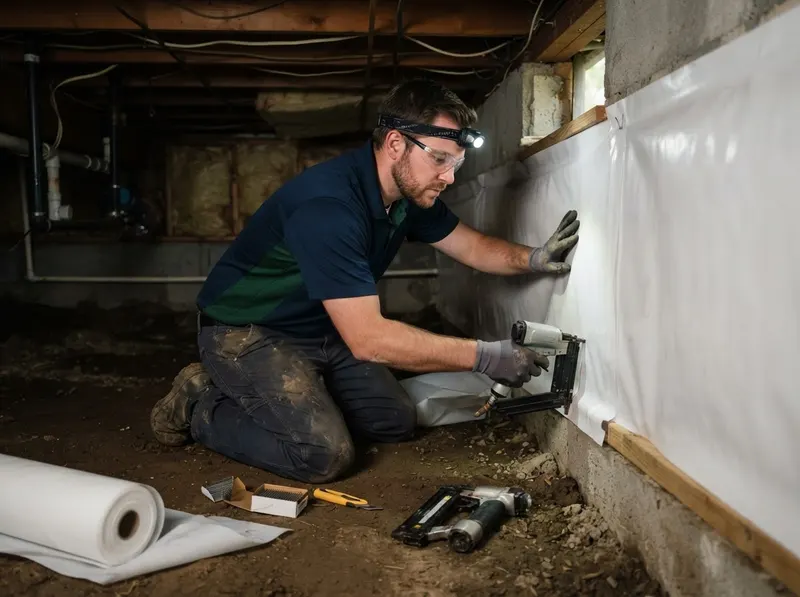
Raised foundation crawlspaces in older Roseville properties suffer from subterranean moisture accumulation that attracts subterranean termites, camel crickets, and wood-boring beetles. Technicians clear biological debris and install heavy-duty 10-mil polyethylene vapor retarders across exposed sub-slab earth, mechanically securing seams to prevent soil moisture evaporation. Foundation vents receive corrosion-resistant galvanized wire mesh barriers to prevent rodent access while sustaining essential cross-ventilation. Perimeter sub-soil drainage channels and interior sump locations are inspected to mitigate chronic dampness, adhering to moisture abatement building standards set by the International Code Council .
Get a quote →You get a firm, itemized quote for your pest control services before any work begins, no surprises, no pressure.
Careful prep, tidy work, and a full cleanup when we are done. We treat your home and belongings like our own.
The same trusted, background-checked team from the first call to the final check.
Selecting appropriate structural defense depends on biological targets, infestation history, and structural construction features. If an interior space exhibits isolated foraging trails or seasonal wasp activity, single-target eradication resolves the immediate pest presence with minimal disruption. If a home or commercial building experiences persistent rodent scratching within attic drywall or ongoing ant incursions, multi-stage physical exclusion paired with exterior bait containment is necessary.
Single treatments resolve acute exterior surface hazards at a lower entry cost, whereas multi-stage structural sealing requires specialized hardware installation to prevent recurring access points. If perimeter soil conditions along expansive Placer County clay show active subterranean mud tubes, specialized liquid termiticide barriers or monitored baiting installations become mandatory; basic topical perimeter sprays will not penetrate subterranean nesting zones. Homeowners weighing one-time intervention against ongoing maintenance trade higher upfront sealing expenditures against the predictable control achieved by seasonal exterior barrier updates.
When addressing active rodent contamination in crawlspaces or attics, choosing immediate thermal exclusion combined with sanitation halts microbial dispersion, whereas deferred remediation allows urine-soaked insulation to harbor secondary dermestid beetle infestations. Facilities housing food distribution or medical equipment require tamper-resistant, non-chemical traps along internal runs, whereas residential perimeters allow targeted microencapsulated barrier bands. Selecting between liquid termiticide trenches and bait arrays involves evaluating sub-slab heating ducts, foundation expansion joints, and local water table proximity: liquid soil barriers provide immediate continuous protection along concrete slabs, while monitoring bait arrays avoid perimeter trenching near delicate decorative stone surfaces but necessitate recurring quarterly inspection intervals.
Every project gets a firm, written price after a free on-site visit. Ranges below for orientation.
Tell us about your pest control services job and we'll send a clear, written quote, usually the same day. Or just call and talk to a real Roseville pro.
(916) 674-7008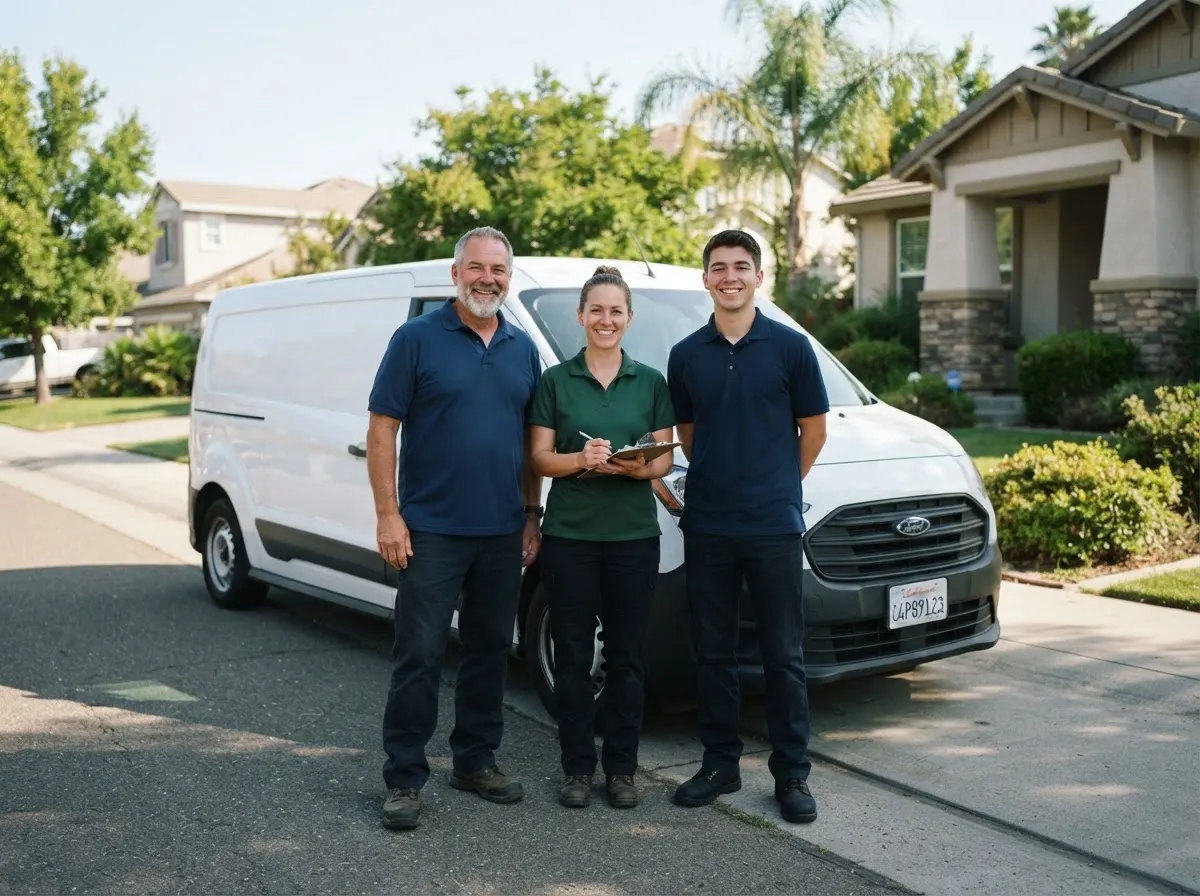
Roseville properties face acute structural pest pressures generated by the direct interface between expanding modern master-planned neighborhoods and protected riparian corridors such as Miner's Ravine Trail, Secret Ravine, and Pleasant Grove Creek. The geographic terrain throughout western and central Placer County is dominated by dense hardpan clay formations. During prolonged, rainless summer heat spells, this soil layer loses moisture, shrinking and developing deep structural fissures that offer subterranean ant colonies and burrowing vermin direct subterranean highways beneath concrete home slabs and grade beams. As temperatures decline sharply in October and November, native roof rat populations inhabiting wild oak groves, blackberry thickets, and open-space riparian belts migrate along overhead telephone utility cables and fence lines into residential roofs across mature developments like Crestmont, Cirby Ranch, and Stoneridge. Furthermore, residential communities throughout Westpark and Fiddyment Farm encounter massive Argentine ant supercolonies that thrive on suburban landscape irrigation, forcing pest pressure inward through stucco weep screeds whenever outdoor irrigation cycles fluctuate.
Free estimates for Roseville & the surrounding area.
For standards, safe disposal, and service guidance on pest control services in Roseville, CA, useful references include U.S. EPA, ENERGY STAR, U.S. Dept. of Energy, Consumer.gov, U.S. Census Bureau, and Google Maps. General consumer and small-business resources are available from USA.gov, Better Business Bureau, FTC Consumer Advice, U.S. Small Business Administration, and Ready.gov.
 Precision Pest Care